Ever looked at the tag on your favourite cotton shirt and wondered about its journey?
Most of the time, the journey is hidden behind barcodes and massive supply chains. At Koolskools, we have always manufactured our clothing with Fairtrade cotton. It is our long-term promise that no matter the global market pressures, we will always make sure that our cotton is sourced from Fairtrade organic cotton cooperatives.
What is Fairtrade?
At its core, Fairtrade is a global movement that ensures the people who grow and make the products we are consuming are treated and compensated fairly. It is a commitment to fair prices, community development, decent working conditions and sustainability. Think of it as a bridge of mutual respect and fairness between you and the person who cultivated the commodities that that you like to eat, drink or wear.
The Reality
The fast fashion industry has a very big, dark side. Global demand for cheap clothing is ever increasing and puts immense pressure on supply chains. Furthermore, heavy government cotton subsidies in places like the US drive global prices down, hitting smallholder farmers the hardest.
This is a huge concern for farmers in India. Our Fairtrade-organic cotton cooperatives are often telling us that, without a collective voice, individual farmers are left at the mercy of landlords and predatory middlemen. They have to borrow money to survive and, tragically, this is a cycle that leads to copious amounts of debt and farmer suicides.
Conventional cotton farming also relies on expensive, toxic pesticides and fertilizers that adversely affect farmers’ health, the soil and the environment. These harmful chemicals are of course significant contributors to the climate change crisis that all the world’s farmers are now facing.
Across villages like Kusumkhunti and Semla, in the cotton growing State of Odisha, India, farmers saw a devastating 50% reduction in anticipated cotton yields due to untimely cyclonic rains and severe winds. The odds seem heavily stacked against those farmers in a climate change context, which is why we will always try to support them through sourcing their cotton.
Fairtrade Minimum Standards provide the framework for Fairtrade certification by detailing the requirements that players in Fairtrade supply chains must fulfil. Those requirements not only encompass farming cooperatives and companies who buy and sell Fairtrade products, but also factories and factory workers.
Textiles factories globally have a mixed story to tell at best, with many clothing factory workers facing adverse working conditions and low pay. By incorporating comprehensive social, economic, and environmental criteria, Fairtrade Minimum Standards are not only designed to support vulnerable smallholder farmers but also to tackle the inherent unfairness of factories who exploit their workers – an unwelcome staple of conventional clothing supply chains.
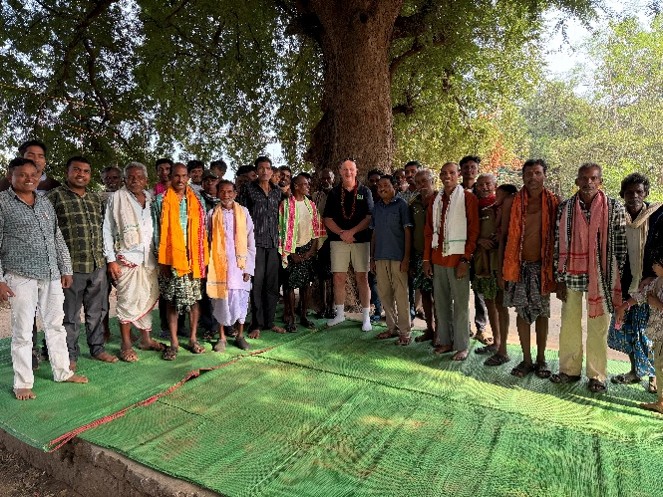
We are proud to be part of a system that aims to level the playing field in global trade and build fair supply systems for the generations to follow.
When you buy a very cheap item of clothing you might well be fueling an unfair, exploitative supply chain.
We believe that ethical consumerism should not be viewed as a trend; it is incumbent on all of us to “think before we buy” – and to keep doing so.
How Fairtrade Evenly Matches the Scales
Fairtrade is not charity; it is a fair business proposition that empowers small holder farmers and factory workers.
Fairtrade-certified cooperatives and supply chains push back against unfair supply chain practices through the following:
-
- The Fairtrade Minimum Price: This is a pricing mechanism that protects Fairtrade-certified farmers when there is a drastic drop in the price of their commodity. It acts as a safety net against globally fluctuating commodity prices and enables farmers to plan based on a guaranteed minimum price for their crop.
- The Fairtrade Social Premium: This is a small amount of money you pay, each time you buy a Fairtrade product, to support community development. It is managed entirely by the farmers. In the villages we visit in India, we see the Fairtrade Premium in action, for example through the collective purchase of crucial non-GMO cotton seeds; the installation of solar panels and village street lighting; communal cotton storage facilities; village school improvements; the installation of water wells in remote villages; and in one case even a sound system for a village to host events like festivals and marriages, providing employment and livelihood to previously unemployed local youngsters.
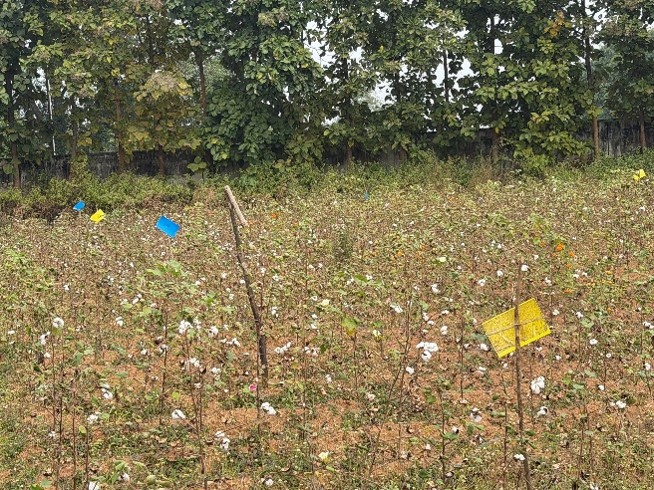
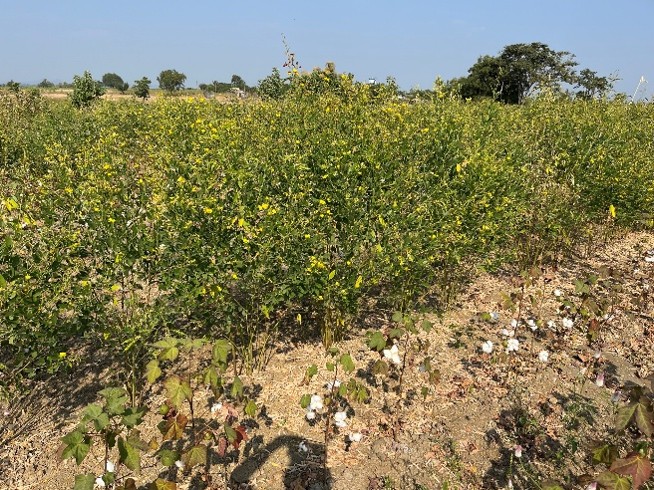
- Climate Action: All of our Fairtrade-certified farms produce cotton totally organically, meaning they use 100% natural organic pesticides and fertilizers. Our farmers practice various other methods of helping the plants to grow organically, such as the use of yellow and blue sticky traps, pheromone traps, and solar traps to attract insects away from the cotton. Farmers are also trained in ‘intercropping’, planting companion crops like okra, lentils and marigolds between cotton lines. As well as offering a natural pest management system, “intercropping” also protects the cotton, prevents soil erosion and provides backup food and income to farmers. Under the Fairtrade premium the distribution of electric stoves also puts the brakes on local deforestation for fire-wood and rejuvenates soil water retention.
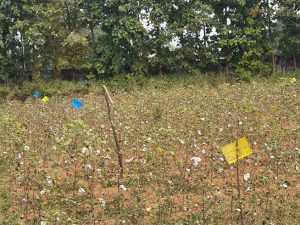
Sticky Traps 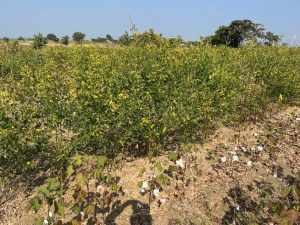
Intercropping alongside Cotton Small Choices, Real Impact
At Koolskools, we are working hard on the UK/India Cotton Schools Support Project. On our trip, we visited many cotton village schools which, whilst full of youthful spirit and vibrant art and songs and an overwhelming desire to learn, are without exception painfully under-resourced. By raising funds with the help of some of wonderful Fairtrade-supporting client schools in the UK, we are aiming further to enhance the human connection between the people that buy our clothes and the communities that produce our cotton and manufacture them.
You do not need to completely overhaul your life to participate in a fairer, more eco-friendly system. True change is built on small, conscious choices:
- Look for the Fairtrade Cotton Mark: Next time you buy a garment made with cotton, see if you can find Fairtrade and Organic cotton certification labels.
- Support truly sustainable, committed brands: Choose transparency. Support brands that form long term bonds with their producers.
- Spread the story: Share, and more importantly understand, the reality of the human and climate-related cost of producing a single cotton garment.

Factory Workers 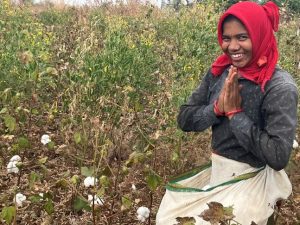
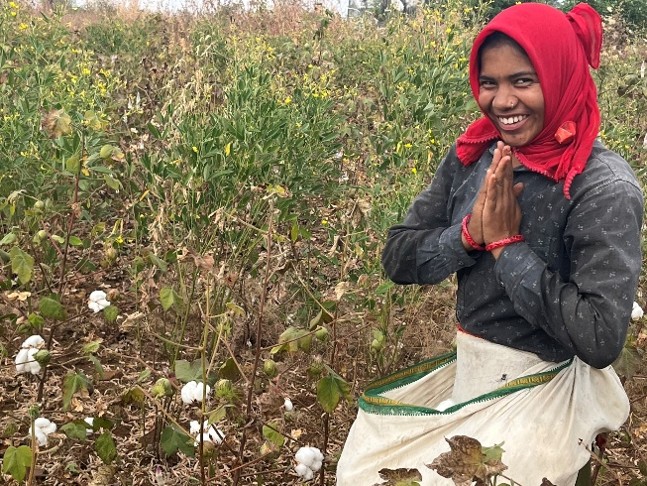
Farmers in the field